Water Treatment Plant (WTP)
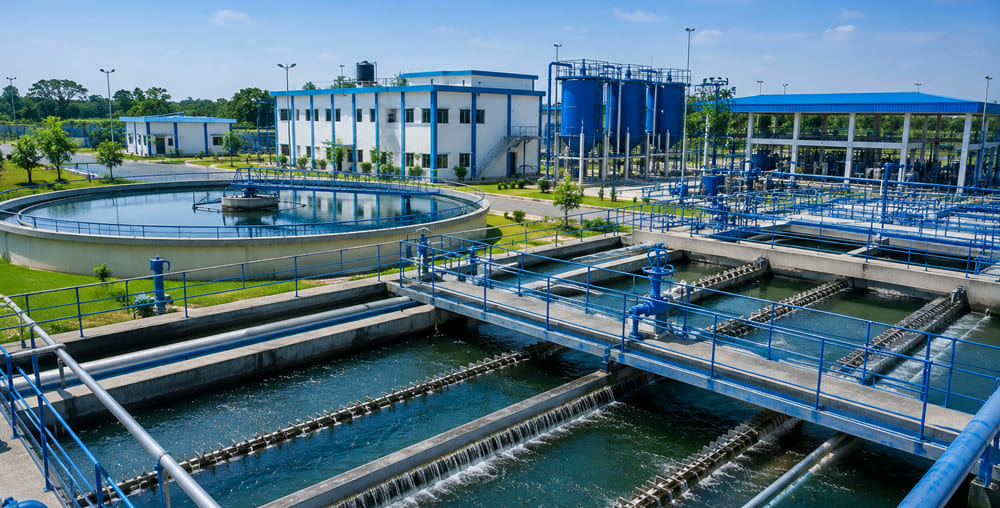
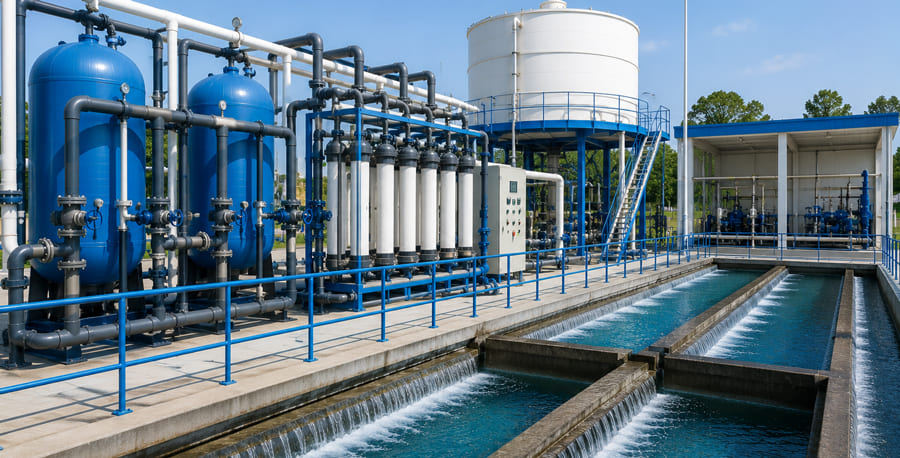
Complete raw water treatment solution to eliminate suspended solids, turbidity, bacteria, and chemical contami...
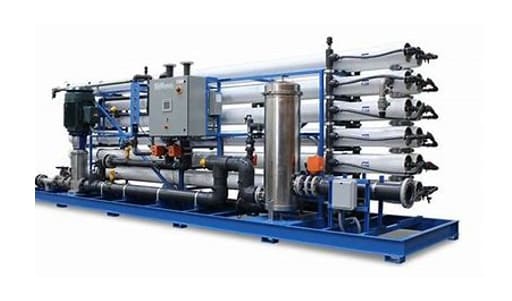
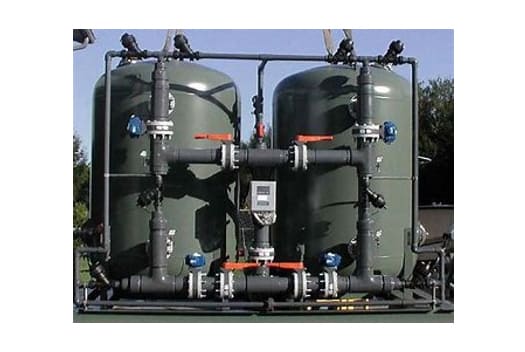
Demineralization (DM) Plants employ co-current or counter-current ion exchange technology (Cation and Anion beds followed by optional Mixed Bed) to achieve water purity with electrical conductivity under 1 µS/cm.
| Parameter / Component | Engineering Specification |
|---|---|
| System Model / Type | Industrial Grade Demineralization (DM) |
| Plant Capacity Range | 500 LPH to 100,000+ LPH (Customizable) |
| Feed Water TDS Range | Up to 10,000 PPM (High Salinity / Effluent Feed Compatible) |
| Permeate Water Quality | < 50 PPM TDS (Complies with BIS IS:10500 & Boiler Feed Standards) |
| Pressure Vessel Material | FRP (Fiberglass Reinforced Plastic) / SS 316 High Pressure Vessels |
| High Pressure Pumps | Grundfos / CNP Vertical Multistage Stainless Steel Pump |
| Membrane Element | Dow Filmtec / Hydranautics High-Rejection Polyamide TFC |
| Piping & Valves | SS 316 / UPVC Sch-80 Heavy Duty Industrial Piping |
| Control Automation | Microprocessor / PLC Panel with Digital Flow & TDS Meters |
High-volume effluent treatment, color removal, and water recycling for dyeing and washing processes.
High-purity purified water (PW) generation complying with Pharmacopoeia standards.
Process water treatment, beverage blending water purification, and CIP rinse water recovery.
Ultra-pure demineralized boiler feed water to prevent scaling, pitting, and tube failure.
Zero Liquid Discharge (ZLD) integration, hazardous effluent reduction, and chemical recovery.
Hotels, hospitals, IT parks, and residential townships requiring clean domestic & STP recycled water.
A DM Plant removes virtually all dissolved mineral ions from water using Cation and Anion ion-exchange resin beds. It produces demineralized water (conductivity <5 µS/cm) essential for high-pressure boilers, power plants, and electronics manufacturing.
The Cation bed converts dissolved salts into corresponding acids by exchanging cations for H+ ions. The Anion bed then absorbs the acids by exchanging anions for OH- ions, forming pure H2O.
Cation resin beds are regenerated using dilute Hydrochloric Acid (HCl) or Sulfuric Acid (H2SO4), while Anion resin beds are regenerated using dilute Sodium Hydroxide (NaOH / Caustic Soda).
A Mixed Bed exchanger contains intimate mixtures of cation and anion resins in a single vessel. Used as a polishing unit, it achieves ultra-pure water with electrical conductivity <0.1 µS/cm and silica <0.02 PPM.
Silica is a weak acid anion removed by Strong Base Anion (SBA) resin beds operated at elevated temperature (~35-40°C) during caustic regeneration for maximum silica elution efficiency.
Our senior environmental engineers will evaluate your raw water parameters, required flow rate, and site footprint to provide an accurate technical and commercial proposal.