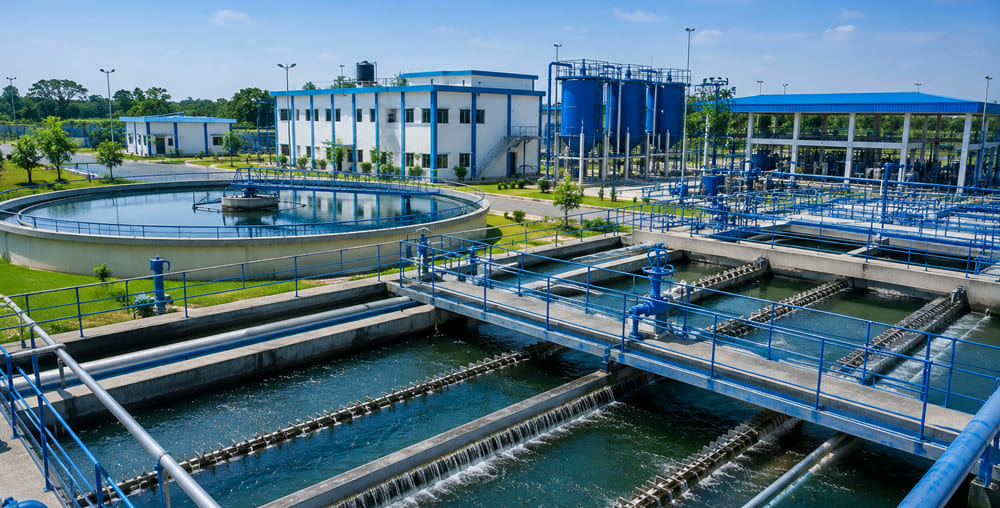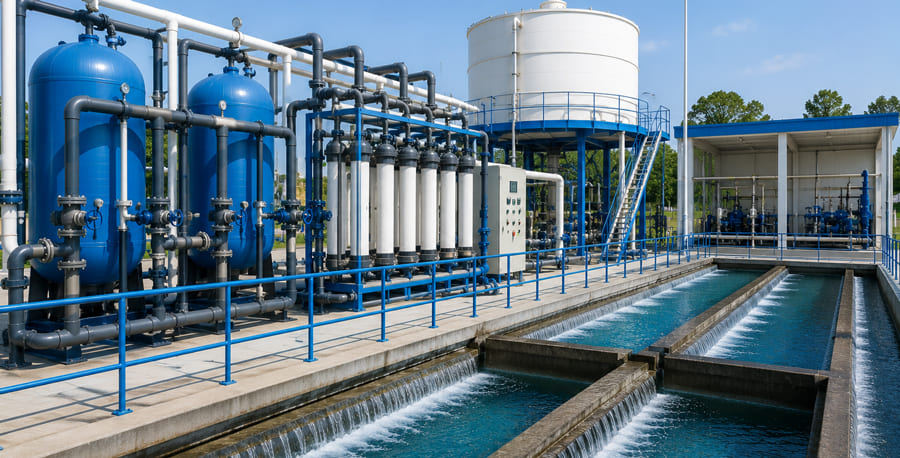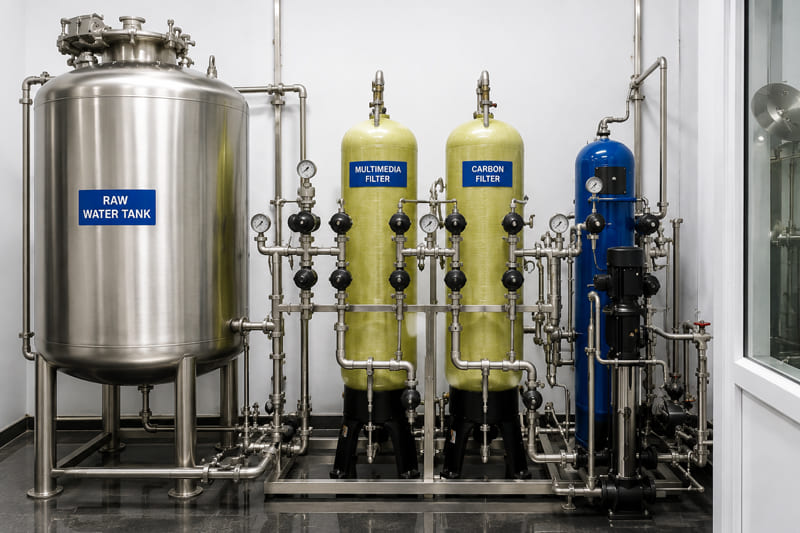
Water Treatment Plant (WTP)
Complete raw water treatment solution to eliminate suspended solids, turbidity, bacteria, and chemical contami...
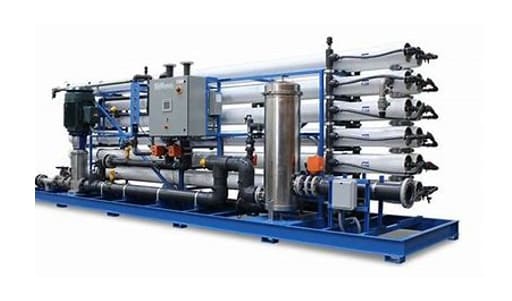
Aqua Care Solution Water Softening Plants utilize premium cation exchange resin to replace scale-forming calcium and magnesium ions with sodium ions, protecting cooling towers, boilers, and plumbing fixtures.
| Parameter / Component | Engineering Specification |
|---|---|
| System Model / Type | Industrial Grade Water Softening Plant |
| Plant Capacity Range | 500 LPH to 100,000+ LPH (Customizable) |
| Feed Water TDS Range | Up to 10,000 PPM (High Salinity / Effluent Feed Compatible) |
| Permeate Water Quality | < 50 PPM TDS (Complies with BIS IS:10500 & Boiler Feed Standards) |
| Pressure Vessel Material | FRP (Fiberglass Reinforced Plastic) / SS 316 High Pressure Vessels |
| High Pressure Pumps | Grundfos / CNP Vertical Multistage Stainless Steel Pump |
| Membrane Element | Dow Filmtec / Hydranautics High-Rejection Polyamide TFC |
| Piping & Valves | SS 316 / UPVC Sch-80 Heavy Duty Industrial Piping |
| Control Automation | Microprocessor / PLC Panel with Digital Flow & TDS Meters |
High-volume effluent treatment, color removal, and water recycling for dyeing and washing processes.
High-purity purified water (PW) generation complying with Pharmacopoeia standards.
Process water treatment, beverage blending water purification, and CIP rinse water recovery.
Ultra-pure demineralized boiler feed water to prevent scaling, pitting, and tube failure.
Zero Liquid Discharge (ZLD) integration, hazardous effluent reduction, and chemical recovery.
Hotels, hospitals, IT parks, and residential townships requiring clean domestic & STP recycled water.
Water softeners use strong acid cation (SAC) sodium-form resin beds. As hard water passes through, calcium (Ca2+) and magnesium (Mg2+) ions are exchanged for harmless sodium (Na+) ions.
Resin becomes exhausted when all sodium sites are occupied by calcium/magnesium ions. Regeneration is performed by flushing the resin bed with a saturated sodium chloride (salt brine) solution.
Salt dosage is calculated based on resin volume and total hardness (PPM as CaCO3). Typically, 100 to 150 grams of NaCl salt per liter of cation resin is required for full capacity recovery.
Hard water causes hard calcium carbonate scaling on heating elements and heat exchangers, leading to thermal insulation, pipe clogging, excessive fuel consumption, and boiler tube rupture risk.
Manual softeners require operators to turn valves for backwash, brine draw, and rinse. Automatic multi-port softeners use digital timer/meter controllers to execute regeneration automatically at night or after volume limits.
Our senior environmental engineers will evaluate your raw water parameters, required flow rate, and site footprint to provide an accurate technical and commercial proposal.