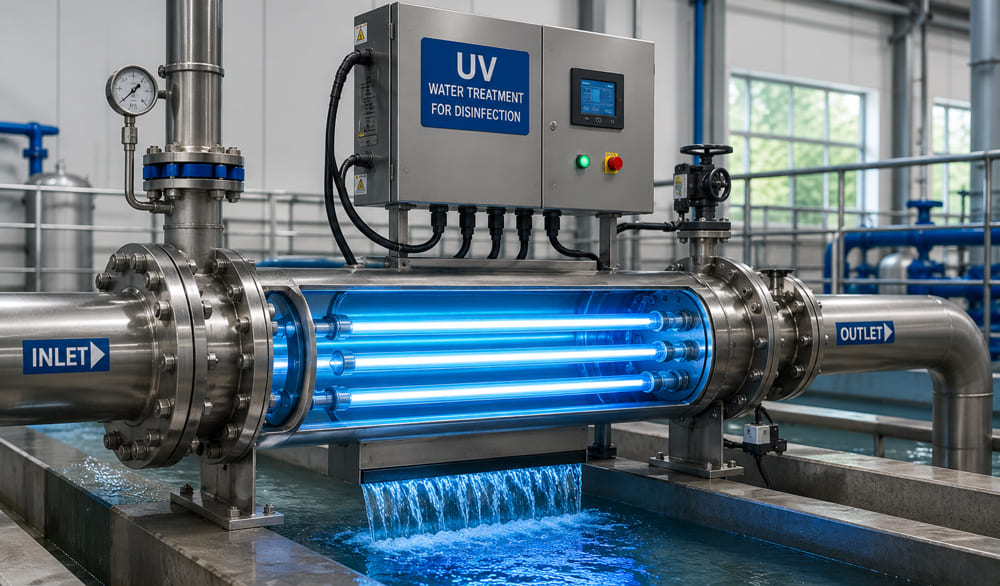
UV Water Treatment
Chemical-free ultraviolet (UV) disinfection systems for instantaneous destruction of bacteria, viruses, and pa...
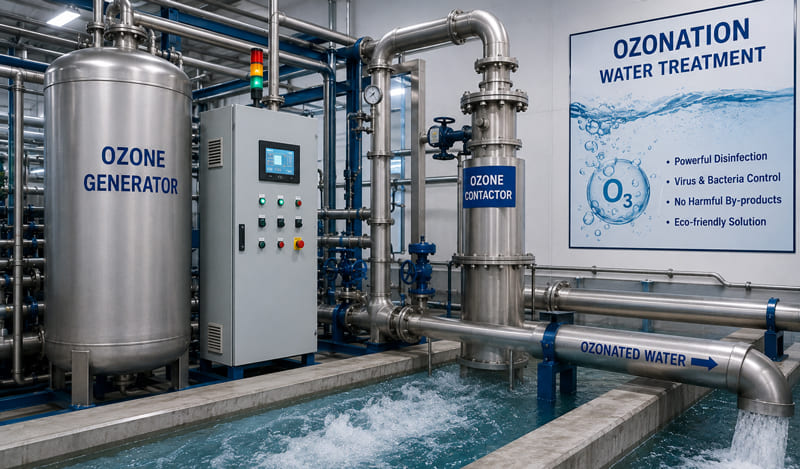
Ozone (O3) Treatment systems utilize corona discharge technology to produce one of the strongest commercially available oxidants and disinfectants. Ozone rapidly oxidizes organic impurities, eliminates stubborn colors, and decomposes back into oxygen.
| Parameter / Component | Engineering Specification |
|---|---|
| System Model / Type | Industrial Grade Ozone Treatment |
| Plant Capacity Range | 500 LPH to 100,000+ LPH (Customizable) |
| Feed Water TDS Range | Up to 10,000 PPM (High Salinity / Effluent Feed Compatible) |
| Permeate Water Quality | < 50 PPM TDS (Complies with BIS IS:10500 & Boiler Feed Standards) |
| Pressure Vessel Material | FRP (Fiberglass Reinforced Plastic) / SS 316 High Pressure Vessels |
| High Pressure Pumps | Grundfos / CNP Vertical Multistage Stainless Steel Pump |
| Membrane Element | Dow Filmtec / Hydranautics High-Rejection Polyamide TFC |
| Piping & Valves | SS 316 / UPVC Sch-80 Heavy Duty Industrial Piping |
| Control Automation | Microprocessor / PLC Panel with Digital Flow & TDS Meters |
High-volume effluent treatment, color removal, and water recycling for dyeing and washing processes.
High-purity purified water (PW) generation complying with Pharmacopoeia standards.
Process water treatment, beverage blending water purification, and CIP rinse water recovery.
Ultra-pure demineralized boiler feed water to prevent scaling, pitting, and tube failure.
Zero Liquid Discharge (ZLD) integration, hazardous effluent reduction, and chemical recovery.
Hotels, hospitals, IT parks, and residential townships requiring clean domestic & STP recycled water.
Ozone is a powerful, chemical-free oxidant produced by corona discharge generators. Dissolved ozone rapidly destroys bacteria, viruses, iron, manganese, color, cyanide, and hard organic compounds.
Ozone is widely used in bottled water disinfection, pharmaceutical PW/WFI loop sanitization, industrial wastewater color removal, cyanide destruction in plating, and cooling tower bio-fouling control.
No, ozone decomposes rapidly back into pure diatomic oxygen (O2) within 15 to 30 minutes, leaving no chemical taste, odor, or chemical residue in the treated water stream.
Systems include ambient ozone leak sensors, off-gas thermal/catalytic ozone destructors, automatic high-pressure shutdowns, and oxygen concentration monitoring for safe indoor operation.
Ozone has a higher oxidation potential (2.07V) than chlorine dioxide (1.50V) and hydrogen peroxide (1.78V), reacting up to 3,000 times faster against resistant microbial spores and viral pathogens.
Our senior environmental engineers will evaluate your raw water parameters, required flow rate, and site footprint to provide an accurate technical and commercial proposal.